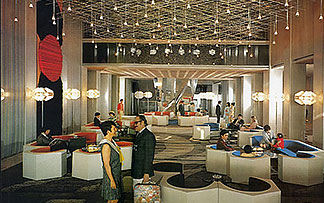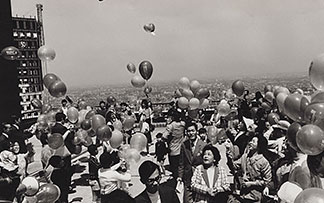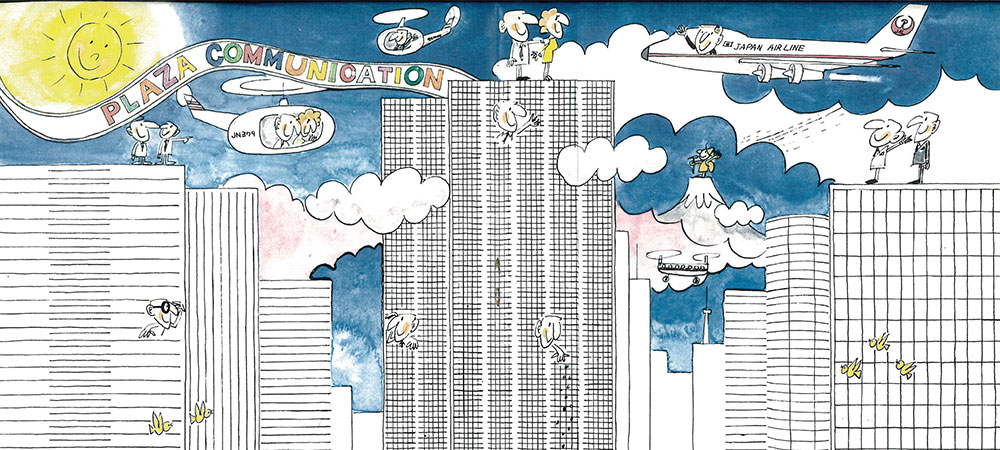
In the 1970s, when hotels were still considered to be used only on special occasions by a limited number of people or as accommodations for travelers, Keio Plaza Hotel was the first hotel to propose a new concept of a hotel as a “plaza” – a place where a wide range of people could gather and relax.
In the 1960s, when the Tokyo Olympics were held and large jet aircraft began operation, accelerating globalization and causing major changes in society, the Tokyo Metropolitan Government announced the “Shinjuku Sub-Center Plan” for the west side of Shinjuku Station, with the goal of creating a model city for the new era. Keio Plaza Hotel’s first president, Sadao Inoue, took this redevelopment plan to heart and walked around the site of the former Yodobashi Purification Plant, which was covered in silver grass, with muddy shoes, searching for a vision of the future for the new city. He believed that every major city in the world had a “plaza” – a place where people could gather and communicate – and he wanted the hotel to function as a “plaza” that would bring vitality to the entire city.
On June 5, 1971, the day Keio Plaza Hotel opened, many famous people sent in words of encouragement and hope for the hotel, which was the first to use the word “plaza” in its name. These words were featured in the newspaper advertisement and opening magazine titled “A Communication Plaza That Opens Hearts”, such as “There is no place more free than a plaza” (Taro Okamoto, artist) and “For the first time, a city that never had a place for everyone now has a place for everyone” (Ikuma Dan, musician).
Keio Plaza Hotel has always aimed to be a plaza for people of all ages, nationalities, and races to come and go, meet, and gather, with the spirit of “creating a lively human space”. This “Plaza Ideology”, which has been cherished and passed down as a fundamental philosophy, remains unchanged even after half a century since the hotel’s opening, and continues to be the foundation of our hospitality.
*Source: “KEIO PLAZA HOTEL TOKYO 1971” (published June 1, 1971)